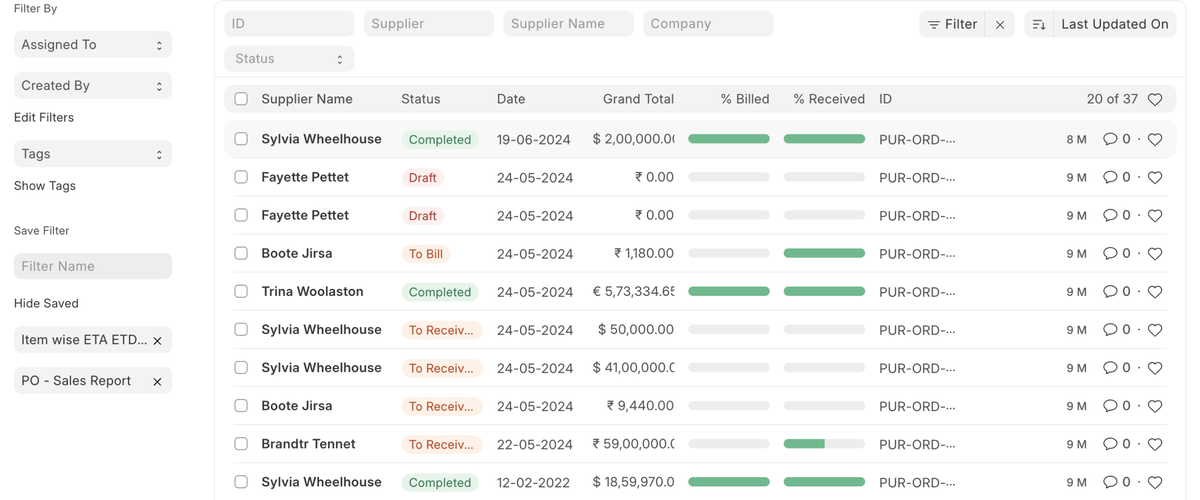
The Promise vs. The Reality
ERP systems are typically introduced with bold expectations:
🚀 What Organizations Expect
- A single source of truth
- Streamlined operations
- Better reporting and faster decisions
- Reduced manual work
⚠️ What Often Happens Instead
- Continued reliance on spreadsheets
- Workarounds outside the ERP
- Low adoption across teams
- Slow or unreliable performance
The gap between expectation and reality is where most ERP projects break down.
The Real Reasons ERP Implementations Fail
1. No Process Clarity Before Implementation
Many ERP projects jump straight into configuration without truly understanding how the business operates.
There’s no clear mapping of:
- How work flows
- Where decisions are made
- Who owns approvals
As a result, the ERP system ends up enforcing assumptions—not reality.
👉 Teams then bypass the system just to get work done.
Key Insight:
ERP should formalize processes, not guess them.
2. Generic Templates Forced on Real Operations
Default templates and industry presets can speed things up—but they often oversimplify real-world operations.
They:
- Ignore operational nuances
- Assume linear workflows
- Miss complex approval layers
This creates friction between the system and actual business needs.
👉 The result? Poor adoption and constant workarounds.
3. Data Quality Is Treated as a Migration Task
Data migration is often seen as a technical step rather than an operational one.
Common problems include:
- Duplicate or inconsistent records
- No ownership of master data
- Lack of validation against real workflows
When data is unreliable, trust in the ERP collapses quickly.
Reality Check:
Bad data doesn’t just break reports—it breaks decision-making.
4. Performance and Scale Are Ignored Early
Many teams optimize for:
- Fast go-live
- Feature completeness
But ignore:
- Data growth
- Concurrent users
- Transaction volume
👉 As usage increases, systems slow down—and confidence drops.
5. Adoption Is Treated as Training
Low adoption is often blamed on users.
So organizations respond with more training.
But here’s the truth:
👉 Training cannot fix a system that doesn’t match how work actually happens.
Adoption problems are usually design problems, not user problems.
Why Software Is Rarely the Real Problem
Platforms like ERPNext, SAP, and Oracle ERP are mature, proven systems used across industries.
When ERP fails, it’s typically due to:
- Poor implementation approach
- Incorrect design assumptions
- Lack of operational context
👉 The software doesn’t fail—it amplifies the decisions made during implementation.
What Successful ERP Implementations Do Differently
✅ Process-First Design
Successful teams start by mapping:
- Workflows
- Approval paths
- Edge cases
Only then do they configure the system.
✅ Workflow-Driven Systems
ERP workflows are used to:
- Reflect real decision-making
- Enforce accountability
- Reduce manual follow-ups
✅ Phased and Structured Delivery
Instead of a “big bang” launch:
- Systems are rolled out in phases
- Real usage is validated early
- Adjustments are made continuously
✅ Long-Term Ownership Mindset
ERP is treated as infrastructure—not a one-time project.
This includes:
- Performance monitoring
- Controlled enhancements
- Clear system ownership
When ERPNext Actually Makes Sense
ERPNext works best when:
- Operations have reached meaningful complexity
- Spreadsheets are no longer scalable
- Multiple teams rely on shared data
- Leadership demands accountability and visibility
It may not be suitable when:
- Processes are undefined
- Ownership is unclear
A Different Approach to ERP
A more effective ERP approach focuses on:
- Process-first system design
- Workflow clarity before configuration
- Data models aligned to real usage
- Performance planning from day one
This shifts ERP from being a “software project” to a business transformation system.
Final Thought
If you’re evaluating ERP—or trying to fix an existing implementation—the most valuable first step isn’t software selection.
It’s clarity.
Because without clarity, even the best ERP system will fail.
With clarity, even a simple system can deliver massive value.